Stance Analyzer
Objective Gait Assessment
What is a Stance Analyzer?

A stance analyzer is an advanced pressure-sensing platform that measures how dogs distribute their weight across all four limbs. This technology provides objective, measurable data about gait and weight-bearing patterns, delivering precise insights that complement hands-on assessment and visual gait analysis.
Detect injury before they show symptoms
What does a Stance Analyzer Measure?
The stance analyzer captures:
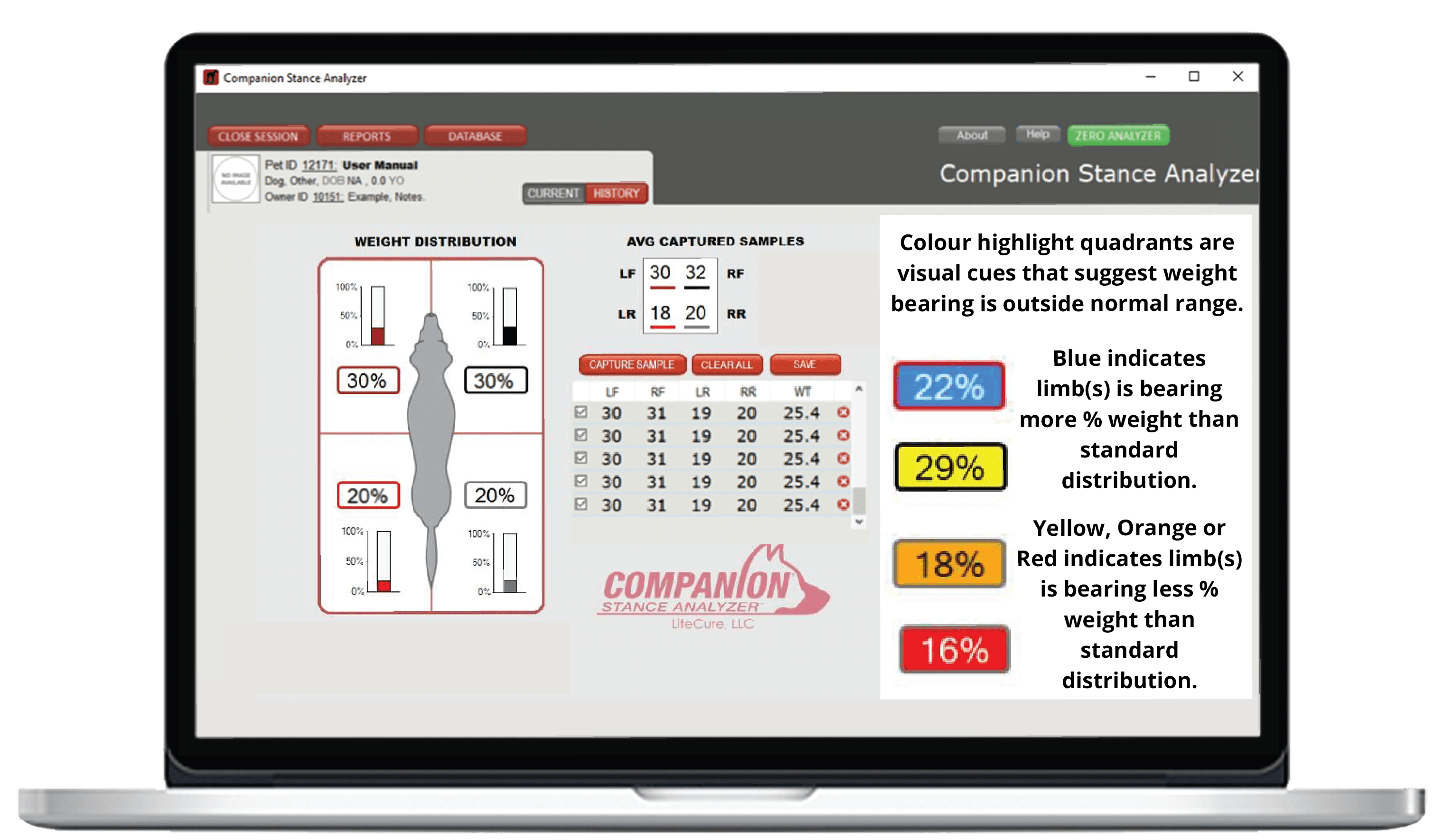
- Weight distribution - The exact percentage of body weight placed on each limb
- Balance and symmetry - How evenly weight is distributed between left and right, front and back
- Compensation patterns - Subtle shifts in weight bearing that may indicate pain, weakness, or discomfort
- Changes over time - Objective measurements that track improvement or decline during rehabilitation.
How Data is Captured and Analysed
Data Capture Process
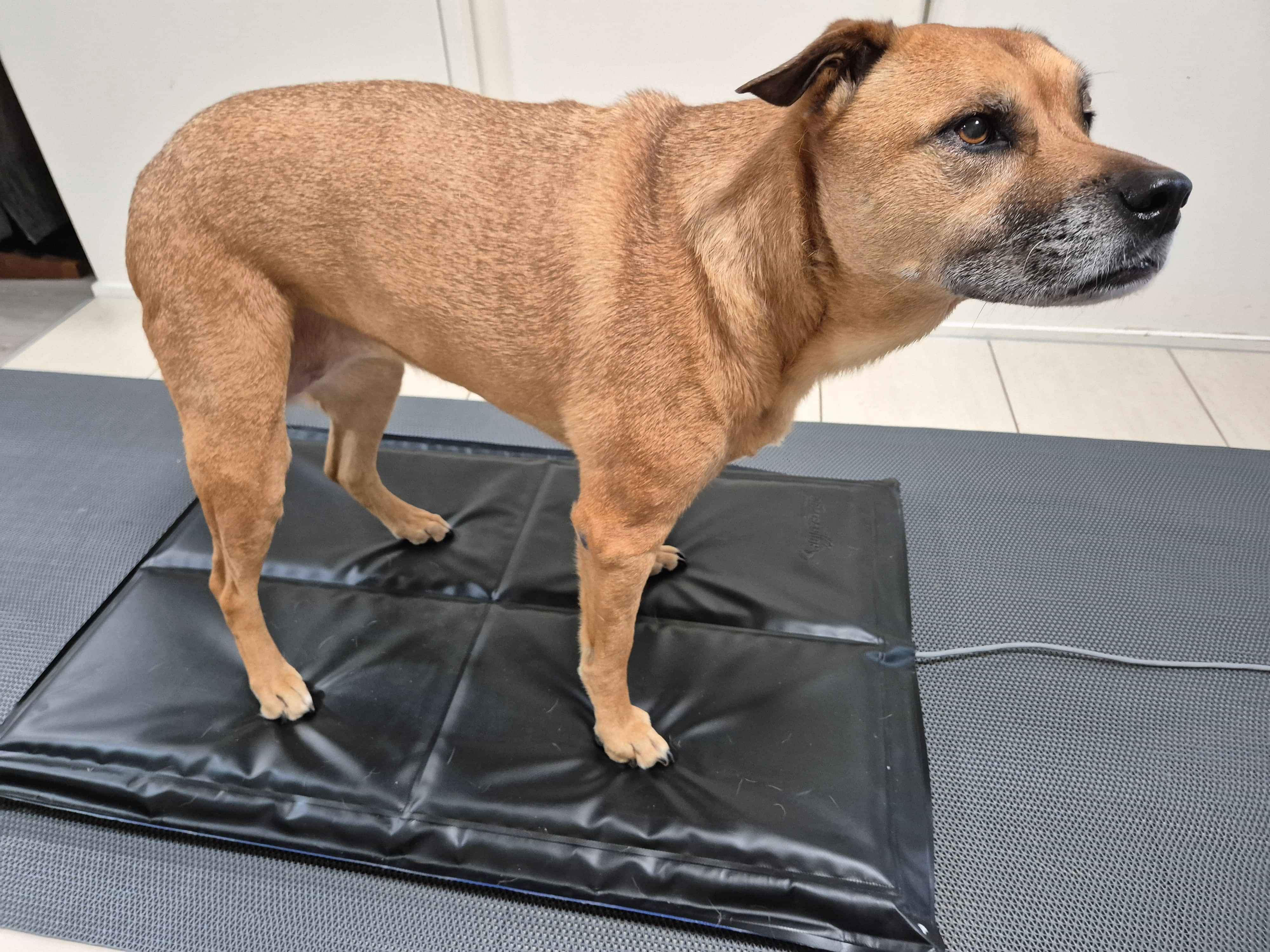
The stance analyzer platform contains an array of pressure sensors that detect the force applied by each paw. When a dog stands on the platform:
- Sensor activation - High-sensitivity pressure sensors beneath the surface detect exactly where and how much force each paw applies
- Multiple readings - Several measurements are taken over 3-5 seconds to ensure accuracy and account for natural weight shifts
- Real-time processing - The system processes pressure data instantaneously, calculating the weight distribution across all four limbs
- Digital recording - Data is captured and stored digitally for precise record-keeping
Analysis and Interpretation
The raw pressure data is converted into clinically meaningful information:
- Weight percentage calculation - The system calculates what percentage of total body weight is carried by each limb (e.g., Left Front: 28%, Right Front: 32%, Left Rear: 18%, Right Rear: 22%)
- Symmetry analysis - Comparison between left and right sides, and front and rear weight distribution
- Deviation from normal - Healthy dogs typically carry approximately 60% of weight on front limbs and 40% on rear limbs, with relatively even distribution between left and right sides
- Limb loading patterns - Identification of which limbs are over-loaded or under-loaded compared to expected norms
- Trend analysis - When multiple assessments are performed over time, changes in weight distribution patterns reveal progress or decline
Visual Data Presentation
Results are displayed in easy-to-understand formats:
- Numerical percentages for each limb
- Graphical representations showing weight distribution visually
- Comparison charts when baseline data exists
- Progress tracking graphs for rehabilitation cases
Clinical Significance
The analyzed data reveals:
- Significant asymmetry - Differences greater than 5-10% between paired limbs often indicate a problem
- Compensation patterns - Dogs may overload the opposite limb or redistribute weight to diagonal limbs
- Subtle changes - Shifts of even 2-3% can be clinically relevant when tracked over time
- Treatment effectiveness - Objective proof of whether interventions are improving weight distribution
- All data is stored in the dog's clinical record, creating a longitudinal history of gait patterns that can be referenced throughout the dog's lifetime.
Why Is This Important?
Dogs are good at hiding pain and compensating for injuries. By the time lameness becomes obvious, weight may have been shifted away from a problem area for weeks or months. The stance analyzer detects these subtle changes that aren't always visible to the naked eye.
Who Benefits from Stance Analysis?
For Healthy Dogs - Establishing a Baseline
One of the most valuable uses of stance analysis is creating a baseline for healthy dogs. Every dog has a unique weight distribution pattern - just as humans favour one leg or side, so do dogs. By recording normal weight distribution when a dog is healthy, a reference point is created for the future.
If a dog later develops lameness, injury, arthritis, or age-related changes, new measurements can be compared to the baseline. This allows for:
• Earlier problem detection, before issues become severe
• Identification of which limb is affected and by how much
• Tracking of subtle changes that might otherwise be missed
• More informed decisions about treatment timing
For Dogs in Rehabilitation or With Known Issues
For dogs recovering from injury, surgery, or managing chronic conditions, the stance analyzer is an essential tool for:
• Objective progress tracking - Quantifiable data shows exactly how much improvement is occurring
• Treatment planning - Understanding which limbs need support helps create targeted therapy plans
• Return to activity decisions - Data helps determine when a dog is ready to increase activity levels
• Early intervention - Catching compensation patterns before they create secondary problems
Dogs with current concerns
• Post-surgical rehabilitation (cruciate repair, hip replacement, fracture repair)
• Osteoarthritis management
• Subtle or intermittent lameness
• Chronic pain conditions
• Neurological conditions affecting mobility
• Suspected compensation from old injuries
What to Expect During Assessment
The assessment is straightforward and stress-free
1. The dog stands naturally on the pressure-sensing platform
2. Multiple readings are captured to ensure accuracy
3. Results are displayed immediately, showing weight distribution percentages
4. Findings are discussed and interpreted
5. Data is saved for future comparison
Centre of Gravity
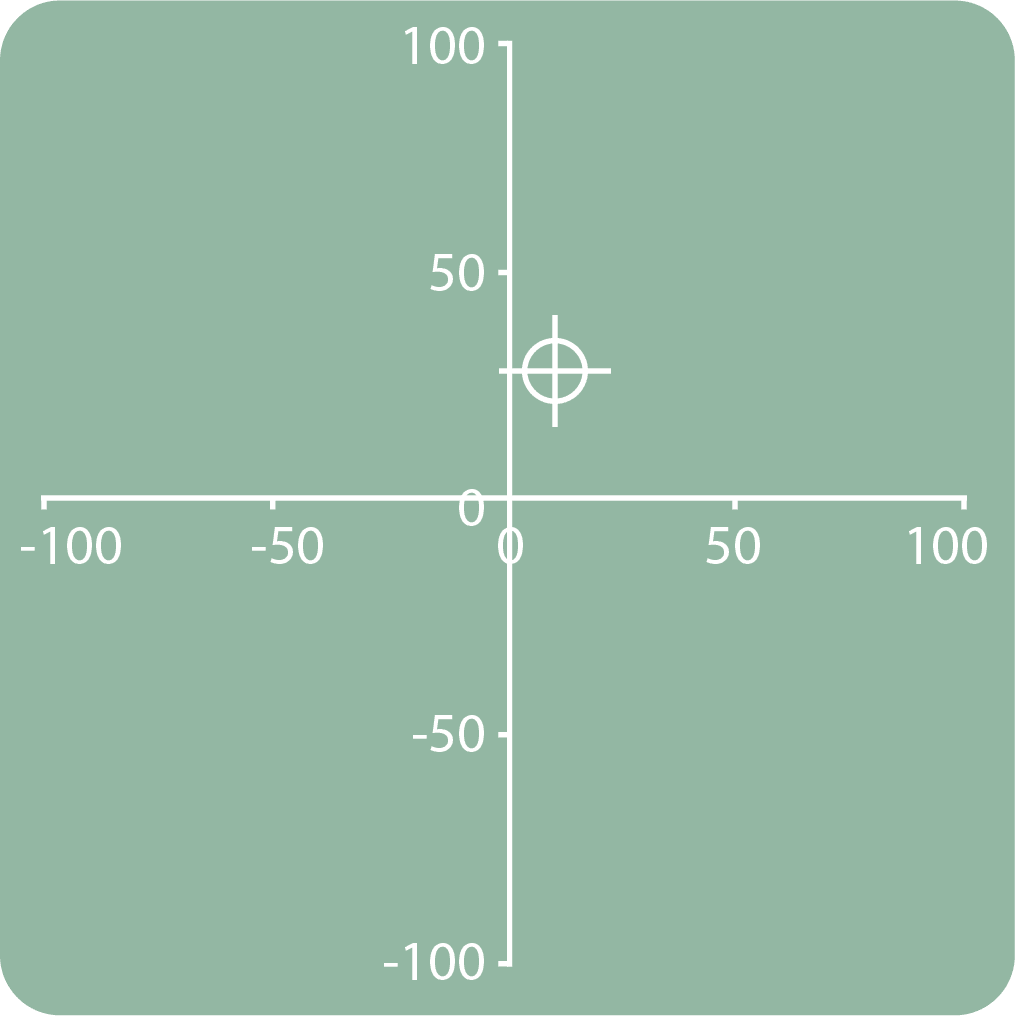
The consistently shifted Centre of Gravity triggers a cascade of health problems:
Compensatory Injuries - Limbs bearing excessive weight develop accelerated joint wear. Dogs shifting weight forward due to hind limb issues commonly develop carpal, elbow, or shoulder problems - creating new injuries while the original problem persists.
Spinal Stress - Abnormal weight distribution forces the spine into compensatory curves, leading to chronic muscle tension, restricted mobility, and increased risk of intervertebral disc disease and spondylosis.
Progressive Muscle Imbalance - Underloaded limbs lose muscle mass and strength while overloaded limbs develop chronically tight muscles. This imbalance worsens the original problem, creating a self-perpetuating cycle of deterioration.
Chronic Pain - Constant muscular compensation causes ongoing discomfort, reducing your dog's willingness to exercise and play. This activity reduction leads to weight gain, further joint stress, and behavioural changes.
Accelerated Degeneration - Joints subjected to uneven loading develop osteoarthritis faster than normal age-related changes.
Stance Analysis Price List
Stance analysis can be added to any K-Laser or massage therapy session or booked as a standalone assessment.
Whether you want to establish a baseline for your healthy dog or need objective data for a current mobility concern, stance analysis provides valuable insights into your dog's movement and comfort.
Individual Session
Stance Analysis only
$75
Combined Session
If incorporated with massage and/
or laser session
$30
Concession Card
Concession of 5 sessions
$325